
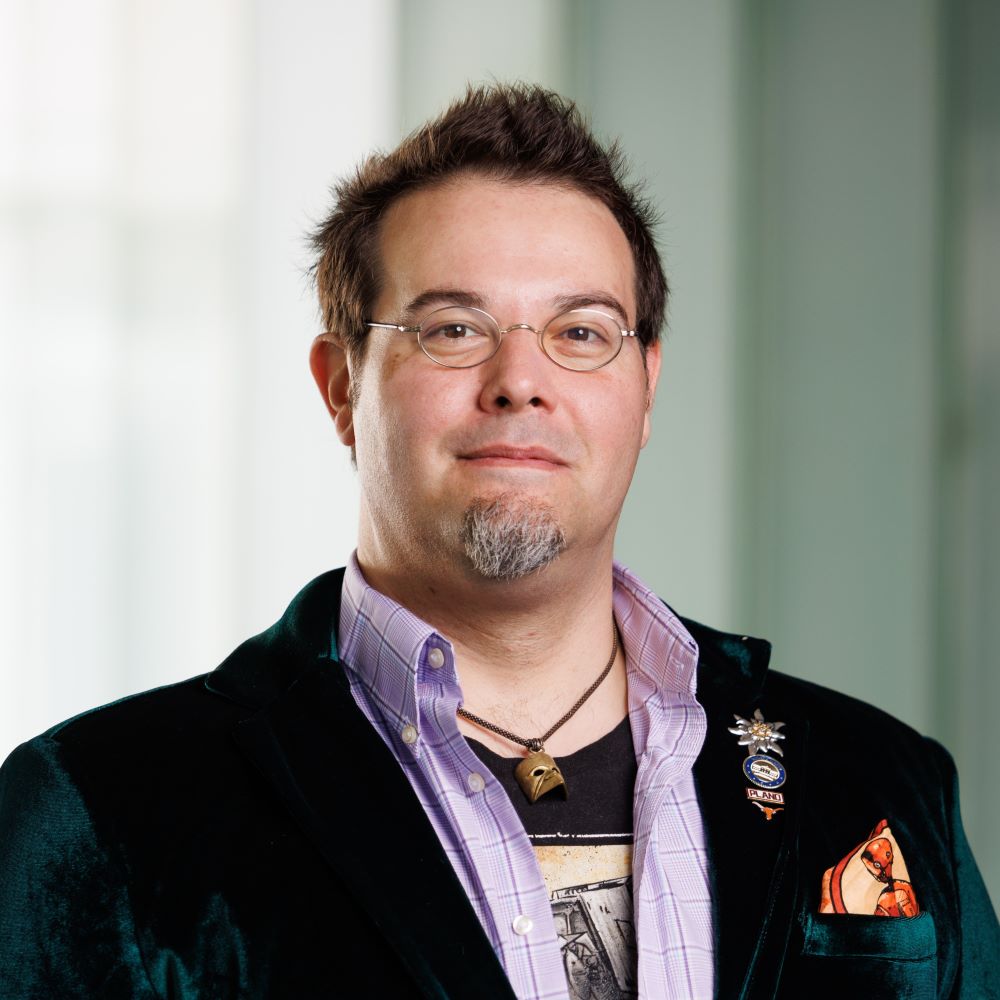
I am an Adjunct Professor of Politics, Economics, Sociology, and Public Policy at the University of San Francisco and a Lecturer in Political Economy at the University of California, Berkeley teaching a variety of Political Economy and Multi-Methods courses.
I am also the Managing Director of the University of San Francisco Policy Lab which facilitates research collaboration between the University, San Francisco, and the broader Bay Area community.
My book project, More than Mere Dead-Weight, challenges the fundamental assumption among many innovators and entrepreneurs that regulations are nothing but a challenge to be overcome in order to succeed. While it draws on a project ten years in the making, this book’s themes are distinctly and increasingly relevant today, particularly in light of the current American presidential administration and the increasing influence of tech on politics and political economy in the United States, Europe, and beyond.
The central message of the book highlights the vital constructive contribution of the ordinary workings of public employees, the harmful mantras of the tech industry, and how the ways they choose to interact might lead to the dystopias we fear but different choices could lead to better outcomes. The book provides a variety of alternative models which have before, are now, and can again guide regulators, innovators, and entrepreneurs towards more productive interactions and demonstrate once again how regulation is so much more than merely a dead-weight loss on markets. Key cases include generative artificial intelligence (AI or genAI), electronic health records (EHR), gene-editing technology (aka. GMOs), and self-driving cars (aka, autonomous vehicles).
My research interests include regulatory politics, comparative political economy, international political economy, and law and political economy with a particular focus on the politics of technology, regulation & governance, and national models of welfare capitalism. With a background in physics and mathematics, I also work on the deeper insights we can gain from qualitative and multi-method research based on deep case knowledge as well as the potential for computational methods to bridge the qual-quant divide.
I earned my Ph.D. in political science from the Travers Department of Political Science at the University of California, Berkeley in May 2023. My dissertation examined the variety of regulatory imaginaries that shape how regulators, innovators, and entrepreneurs coproduce disruptive technological innovation in advanced industrial democracies.
While at Berkeley, I also worked as the Graduate Coordinator and Web Manager for the Network for a New Political Economy (N2PE), an interdisciplinary network of faculty and students launched at the University of California, Berkeley that aims to rethink political economy and develop an alternative to the neoliberal paradigm. In my work for the Network, I helped to organize, announce, and run events with faculty and practitioners around the world and collaborated with Steve Vogel to launch the Designated Emphasis in Political Economy at Berkeley, a PhD minor program that allows students to build interdisciplinary skills in Political Economy. This work has continued after my graduation as part of the Berkeley Economy and Society Initiative (BESI).
Before beginning my doctoral work, I worked in e-commerce data production and management to drive faceted search for industrial suppliers. Prior to that, I completed the Master of Arts Program in the Social Sciences (MAPSS) at the University of Chicago with concentrations in Political Science and Science and Technology Studies (STS). I earned simultaneous undergraduate degrees from The University of Texas at Austin in Government (with Special Departmental Honors) and Physics (with a minor in Mathematics). In my spare time, I enjoy dabbling in some of the technologies I study, including sewing, 3-D Printing, platform economy pro-sumption, and living in California with a (legally) modified car.
Posch pronounced like “potion” without the “-on.”

